
Biochar-Based Cladding Panels: A Sustainable Alternative for Modern Buildings
The construction industry is entering a new phase where sustainability, carbon reduction, and responsible material use are becoming essential. Among the emerging innovations, biochar-based cladding panels stand out as a promising solution that combines performance, aesthetics, and environmental responsibility.
CONSTRUCTION AND ENERGYSUSTAINABLE TECHNOLOGIES
Jayesh Bobade
12/13/20252 min read
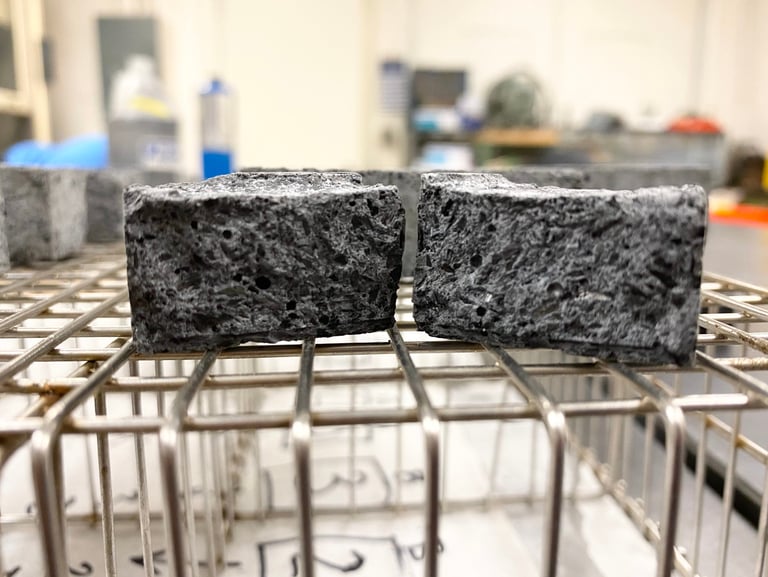
What Are Biochar-Based Cladding Panels?
Biochar-based cladding panels are architectural façade panels made from biochar, a carbon-rich material produced by heating agricultural or organic waste under low-oxygen conditions (a process called pyrolysis). The biochar is then blended with natural binders or recycled polymers to form durable, lightweight, and visually appealing panels suitable for external wall cladding. Unlike traditional façade materials like ACP (Aluminium Composite Panels) or high-carbon cement boards, biochar panels are designed to store carbon rather than emit it.
Why Biochar Matters?
Biochar has a unique property: it locks carbon inside a stable structure for hundreds of years, preventing it from returning to the atmosphere as CO₂.
This means that every square meter of a biochar panel actively supports long-term carbon storage.
Key environmental benefits include:
• Carbon negative production
During manufacturing, the amount of carbon trapped in biochar is more than the emissions generated, resulting in a net carbon-negative material.
• Waste reduction
Agricultural residues, wood waste, and other organic byproducts are converted into useful products instead of being burned or discarded.
• Low embodied energy
Production requires less energy compared to aluminium, cement fibre boards, or steel-based cladding materials.
How Are These Panels Manufactured?
The process of creating biochar-based cladding panels typically involves:
1. Collecting waste biomass – such as crop waste, forest residue, or sawdust.
2. Pyrolysis – heating biomass in controlled conditions to produce biochar.
3. Mixing – blending biochar with binders or recycled composites.
4. Moulding and pressing – forming panels with the required thickness, finish, and strength.
5. Surface finishing – adding textures, coatings, or colours to achieve desired architectural aesthetics.
This manufacturing method enables enormous flexibility, allowing panels to mimic wood, stone, matte textures, or premium architectural finishes.
Performance Advantages
Beyond sustainability, biochar-based cladding panels offer several practical benefits:
• Lightweight and strong – easy to handle, transport, and install.
• Thermally efficient – improved insulation due to biochar’s low conductivity.
• Fire-resistant – depending on the binder, these panels can achieve high fire ratings.
• Moisture and UV resistant – suitable for exterior use in varied climates.
• Customisable textures and finishes – support modern architectural designs.
Comparison with ACP Panels
ACP has been widely used for decades, but it carries environmental challenges such as high embodied carbon, fire concerns, and recyclability issues.
Biochar panels offer an alternative with:
• Lower carbon footprint
• Better thermal performance
• Reduced environmental impact
• More natural aesthetics
• Improved long-term sustainability
For projects aiming for LEED, IGBC, GRIHA, or ESG alignment, biochar cladding provides a strong advantage.
Why the Construction Industry Should Pay Attention?
As cities expand and climate policies tighten, developers and architects are under pressure to adopt materials that reduce emissions and improve building performance.
Biochar-based cladding aligns with this future by:
• Supporting net-zero and carbon-negative building goals
• Encouraging circular economy practices
• Offering a visually appealing, cost-competitive alternative
• Reducing dependency on high-carbon materials
These panels represent the next generation of façade technology—sustainable, innovative, and suitable for both industrial and commercial projects.
Looking Ahead
With increasing awareness and technological development, biochar-based cladding panels have the potential to become mainstream in the coming decade.
They present a rare combination of environmental impact, practical performance, and modern design flexibility.
For builders, architects, and clients seeking to create future-ready spaces, biochar cladding is more than a material—it is a shift toward responsible and resilient construction.
Article by Jayesh Bobade - Estimation and Costing Engineer
Connect
info@energizetomorrowus.com
© 2026. All rights reserved.