
Does standardisation help or hinder sustainable construction?
Sustainability has emerged as a primary focus within the construction sector, influencing the design, delivery, and assessment of buildings throughout their lifecycle. At the same time, a significant trend is reshaping project execution: standardisation. Through the implementation of modular construction systems and repeatable design templates, standardisation promises enhanced efficiency, cost management, and expedited delivery. However, the interplay between standardisation and sustainability is more intricate than it may initially seem. On the surface, the connection appears straightforward. Standardisation minimizes waste, enhances consistency, and facilitates scalable solutions, all of which align with sustainability objectives. Nevertheless, in practice, the very attributes that render standardisation effective can also impose limitations that hinder flexibility and innovation. Thus, the pertinent question is not whether standardisation is advantageous, but rather whether it truly improves sustainability outcomes or, in certain instances, holds them back.
MOST RECENTCONSTRUCTION AND ENERGY
Neel Joshi
4/18/20266 min read

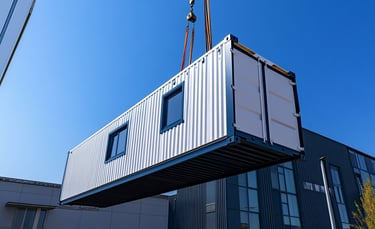
Efficiency at scale: the sustainability case for standardisation
One of the strongest arguments in favour of standardisation lies in its ability to improve efficiency across the construction process.
Standardised components and repeatable systems allow for more accurate planning, better material estimation, and reduced uncertainty during execution. This directly translates into lower material waste, an issue that continues to challenge construction projects globally.


Projects such as Ten Degrees Croydon in the UK demonstrate this clearly. As one of the tallest modular residential buildings in the world, it utilised off-site manufacturing to produce repeatable units in controlled environments. This approach significantly reduced material waste, improved quality control, and enhanced overall resource efficiency. By shifting a large portion of construction activity away from the site, the project also minimised disruption and improved productivity.
Similarly, smaller-scale developments reinforce this pattern. The Black Park Café project in the UK combined modular construction with renewable energy systems, including solar panels and air-source heat pumps. The use of standardised components enabled efficient assembly while supporting net-zero ambitions, showing how repetition and sustainability can work in tandem when aligned effectively.
Another example is “The Stack” in New York, where modular construction allowed for faster delivery and reduced waste through repeatable unit design. By leveraging standardisation, the project demonstrated how efficiency gains can scale across developments, amplifying sustainability benefits.
These examples highlight a key point: when applied effectively, standardisation can act as a powerful enabler of sustainable construction by reducing inefficiencies and enabling consistent delivery.
The Limitations: When efficiency comes at a cost
In spite of its benefits, standardisation is not universally sustainable across all contexts. A significant limitation is the decrease in flexibility. Sustainable construction is intricately linked to local factors: climate, site limitations, material availability, and intended building use all play a role in determining the most effective solution. Standardised systems are inherently designed for consistency rather than adaptability. This can lead to scenarios where a solution may be efficient, yet not the most effective.
For example, a standardised façade or building system tailored for a specific set of environmental conditions may perform inadequately in a different context. Likewise, dependence on predetermined materials or systems can restrict the incorporation of locally sourced or lower-impact alternatives, thereby increasing the overall carbon footprint.


The difficulties encountered by 461 Dean Street in New York illustrate this complexity. As one of the earliest large-scale modular high-rise projects, it sought to utilise standardisation for enhanced efficiency. However, the project faced considerable delays and coordination challenges, partly due to the complexities involved in managing variations within a modular framework. This underscores a vital truth: standardisation does not eradicate complexity; rather, it can sometimes transfer it to other areas of the process. Additionally, there exists a wider concern regarding innovation.
Standardisation promotes repetition, which enhances efficiency but may hinder experimentation. In a domain where sustainable solutions are evolving swiftly, this creates a conflict. An excessive reliance on established systems may restrict the integration of new materials, construction techniques, or design strategies that could yield superior environmental results. In this regard, standardisation can impose a limit, where efficiency is maximised, yet innovation is stifled.
The modular construction dilemma
The topic of modular construction sits at the centre of this discussion, representing both the potential benefits and the constraints of standardisation.
On one side, it presents significant sustainability benefits. Off-site manufacturing minimizes waste, optimizes material usage, and improves quality assurance. Additionally, it accelerates construction schedules, which can mitigate the environmental effects linked to extended site operations.
Conversely, modular systems are heavily reliant on standardisation.
This reliance introduces a fundamental trade-off. As a system becomes more standardised, its efficiency increases, but its adaptability to particular project requirements diminishes. In certain instances, this may result in overdesign or inefficiencies. Modules might be engineered to fit a variety of scenarios, leading to excessive material consumption or less-than-ideal performance in specific situations.
Sustainability encompasses more than just construction efficiency; it encompasses the entire lifecycle of a building. Key factors include durability, adaptability, and ease of maintenance. Highly standardised systems may find it challenging to accommodate future modifications, which could lead to a reduction in a building’s useful life or an increase in the necessity for resource-intensive interventions. Innovative methods, such as the implementation of cross-laminated timber (CLT) in modular construction, provide a more holistic viewpoint. By integrating standardised systems with low-carbon materials, these initiatives illustrate how efficiency and sustainability can be harmonised more effectively. Timber-based modular construction not only diminishes embodied carbon but also promotes circular economy principles through enhanced material utilisation and the potential for reuse.
Towards a balanced approach
The connection between standardisation and sustainability is not a straightforward choice. Instead of prioritising one over the other, the emphasis should be on their integration.
A balanced strategy involves the selective application of standardisation. Elements such as structural systems or core components benefit from repeatability and efficiency. Conversely, other factors like façade design or material choice require flexibility to adapt to local circumstances. This hybrid approach enables projects to achieve efficiency improvements while also prioritising sustainability. Equally important is the feedback obtained from site execution.
Standardised systems are frequently created in design or manufacturing settings, yet their effectiveness is ultimately assessed on-site. Integrating feedback from construction teams can aid in refining these systems, ensuring they are both practical and effective. Technology can further enhance this process. Digital tools and performance monitoring can offer insights into the effectiveness of standardised solutions across various contexts, facilitating ongoing improvement.
A shift in perspective
The increasing focus on sustainability needs a more comprehensive change in the approach to construction. Sustainability now encompasses more than just materials or individual design choices. It involves systems, processes, and results throughout the entire lifecycle of a building. Standardisation can facilitate this transition by enhancing efficiency and allowing for scalable solutions.
However, it is not a complete solution. When implemented without regard for context, it can result in inflexible systems that do not cater to specific project requirements. It may also stifle the innovation needed to tackle future challenges. The true potential lies in merging efficiency with adaptability; utilising standardisation where it is beneficial, while maintaining flexibility where it is most crucial.
Conclusion
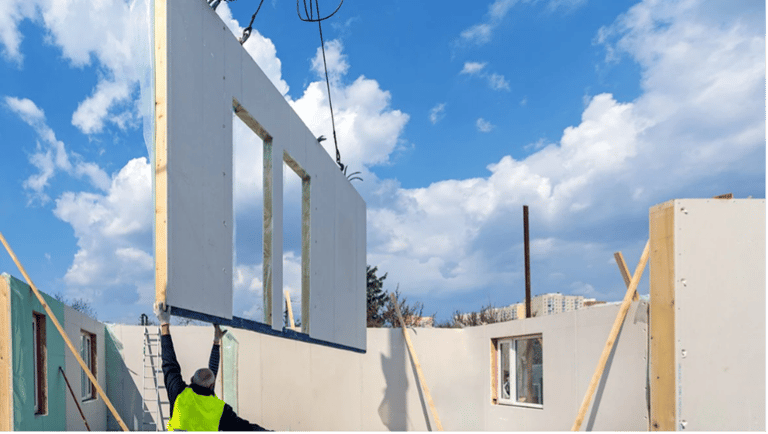
Standardisation has the potential to help sustainable construction. By increasing efficiency, minimising waste, and promoting scalable practices, it can contribute to more reliable outcomes.
Nonetheless, its limitations must be acknowledged. Diminished flexibility, restrictions on innovation, and difficulties in adjusting to local conditions underscore the necessity for a more sophisticated approach. The future of sustainable construction will not be determined solely by standardisation or by completely custom solutions. It will rely on how well the two are integrated.
Because in the end, sustainability is not merely about efficiency. It is about executing the right actions efficiently and within the appropriate context.
REFERENCES
Ahn, Y.H. and Kim, K.-T. (2014). Sustainability in modular design and construction: a case study of ‘The Stack’. International Journal of Sustainable Building Technology and Urban Development, 5(4), pp.250–259. doi: https://doi.org/10.1080/2093761x.2014.985758.
Bertram, N., Fuchs, S., Mischke, J., Palter, R., Strube, G. and Woetzel, L. (2019). Modular construction: From projects to products | McKinsey. [online] www.mckinsey.com. Available at: https://www.mckinsey.com/capabilities/operations/our-insights/modular-construction-from-projects-to-products.
Chen, C. (2023). Application of modular construction method to constructing buildings: advantages and barriers. Proceedings of the Institution of Civil Engineers - Smart Infrastructure and Construction, 176(2), pp.1–9. doi: https://doi.org/10.1680/jsmic.22.00017
Deloitte (2024). Sustainable Construction. [online] www.deloitte.com. Available at: https://www.deloitte.com/global/en/Industries/energy/perspectives/sustainable-construction.html
Hořínková, D. (2021). Advantages and Disadvantages of Modular Construction, including Environmental Impacts. IOP Conference Series: Materials Science and Engineering, [online] 1203(3), p.032002. doi: https://doi.org/10.1088/1757-899x/1203/3/032002
Lawson, M., Ogden, R. and Goodier, C. (2019). Design In Modular Construction. S.L.: Crc Press.
Maleki, B., Casanovas-Rubio, M. del M., Tsavdaridis, K.D. and de la Fuente Antequera, A. (2024). Integrated Value Model for Sustainable Assessment of Modular Residential Towers: Case Study: Ten Degrees Croydon and Apex House in London. Sustainability, [online] 16(2), p.497. doi: https://doi.org/10.3390/su16020497
Pressmach.com. (2024). How Modular Construction Improves Accessibility in Remote Areas - Pressmach. [online] Available at: https://www.pressmach.com/blog/how-modular-construction-improves-accessibility-in-remote-areas.
Stinson, L. (2016). What Cities Can Learn From the World’s Tallest Modular Building. [online] Wired. Available at: https://www.wired.com/2016/11/cities-can-learn-worlds-tallest-modular-building/
Connect
info@energizetomorrowus.com
© 2026. All rights reserved.