
Fog Catchers: Harvesting Water from Thin Air
In a world growing drier, nearly two in ten people lack access to safe drinking water, according to the United Nations. Fog harvesting offers a promising solution by collecting water from fog in arid regions. This article explores the technology's ancient origins, modern implementations, success stories, challenges, and innovative solutions for the future.
SUSTAINABLE TECHNOLOGIES
Aadesh Aslekar
12/11/20253 min read
The Global Water Crisis
Freshwater scarcity threatens sustainable human development worldwide. Millions die annually from diseases linked to poor water supply, sanitation, and hygiene. The United Nations predicts 2.4 billion people will face severe shortages by mid-century.
However, in many desert regions with minimal rainfall, fog and dew provide abundant, untapped water sources.
What Is Fog Harvesting?
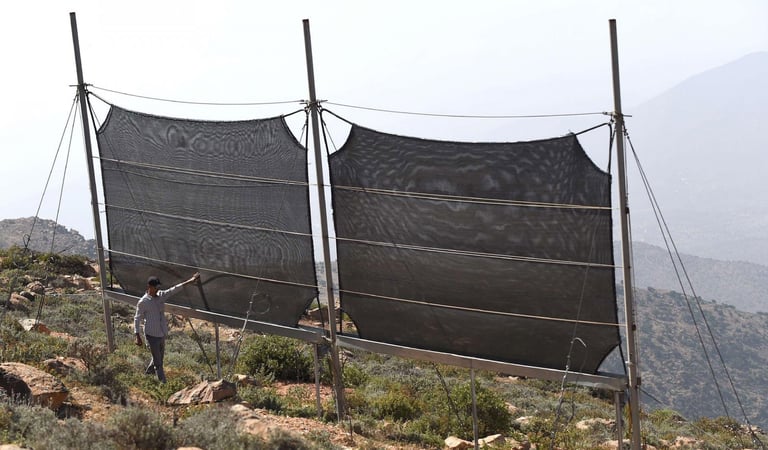
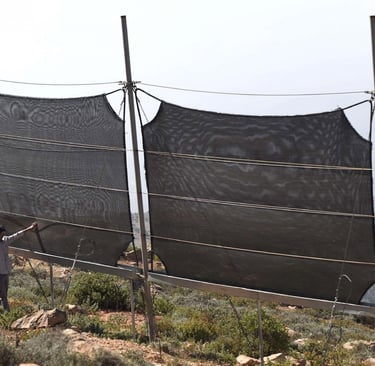
Fog harvesting collects tiny water droplets from fog using large vertical mesh nets. The droplets coalesce on the mesh and flow into troughs below. These systems, called fog fences or fog nets, provide potable water in arid climates.
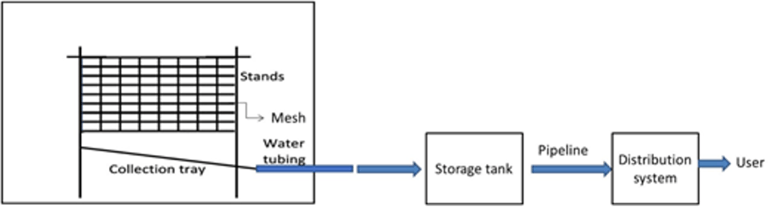
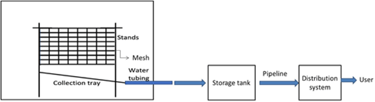
Figure 1: Traditional community-based fog water harvesting system.
Ancient Origins
Fog collection dates back millennia. Ancient Israelites built low circular walls around plants to capture condensation. In Chile's Atacama Desert and Egypt, stone piles condensed dew for collection.
During the Inca Empire, people placed buckets under trees. Some communities still collect water from plant stems today.
Modern Scientific Development
Scientific experiments began in South Africa between 1901 and 1904. In 1969, an Air Force base there used two 100 m² fences, yielding 11 liters per day—110 ml per square meter.
In 1987, Chile's Catholic University and Canada's International Development Research Centre (IDRC) conducted larger studies, advancing the technology significantly.
Successful Implementations Worldwide
Fog harvesting now operates in many arid regions. In Chile, one system supplied 15,000 liters daily to 300 residents, enabling agriculture and tourism. Peru's fog farms capture 200–400 liters daily through local partnerships. Guatemala's 42 large collectors provide 5 L/m²/day to 200 people during dry seasons.
In Morocco's Anti-Atlas Mountains, the Dar Si Hmad (DSH) NGO built a major system in 2015. This water-poor region experiences dense fog for six months of the year. DSH's SMS-monitored network improved efficiency by 500%, earning a 2016 UNFCCC award.
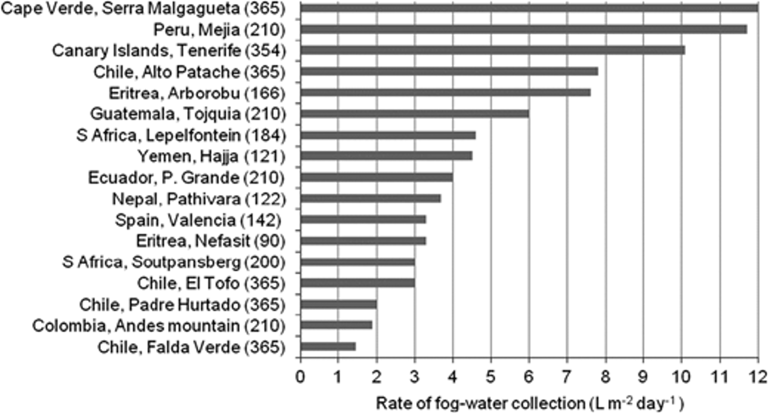
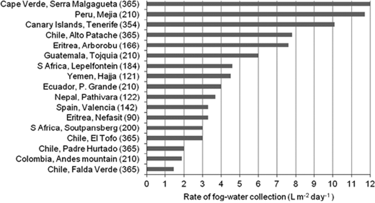
Figure 2: Fog water collection rates and frequency by region.
Lessons from Failed Projects
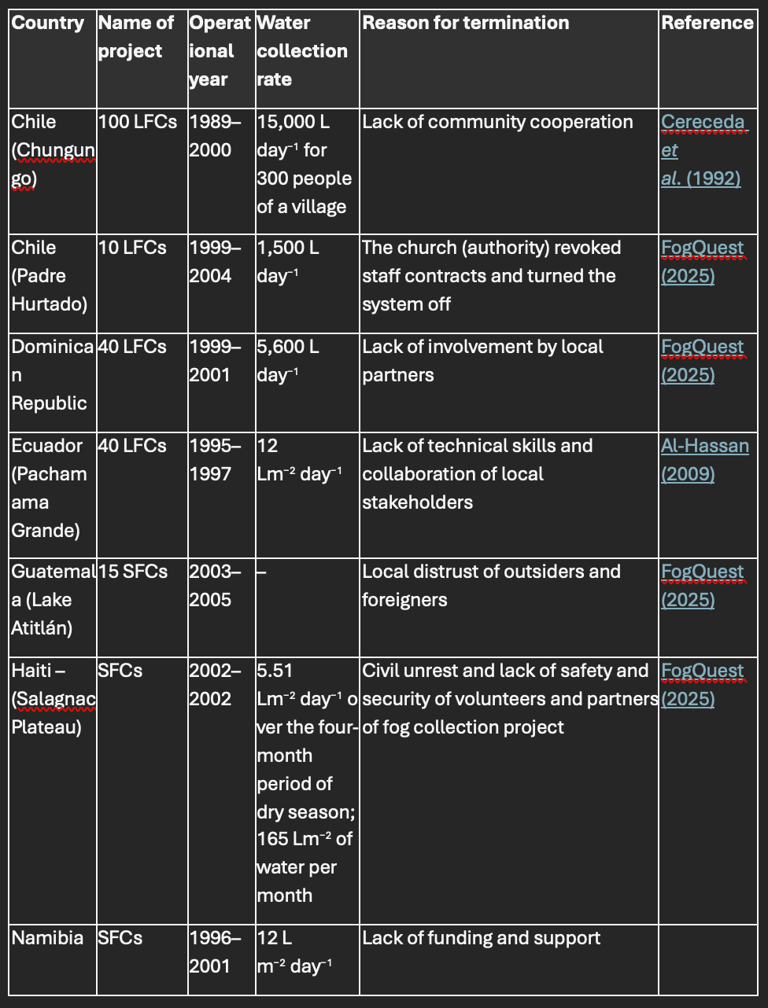
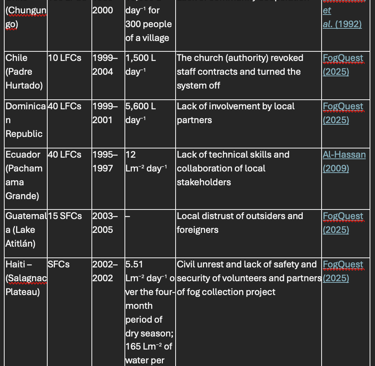
Long-term success remains challenging. Many projects failed due to socioeconomic issues, poor community involvement, and technical problems. The table below highlights key examples:
Key Limitations
Fog fences depend on local climate and topography. Yields vary with weather, including El Niño events. Contamination from dust, birds, or mold poses risks. High setup costs, like those for CloudFisher systems, limit scalability.
Emerging Solutions
Robust designs address environmental challenges. CloudFisher withstands 120 km/h winds and yields 600 L/net/day in Morocco with minimal maintenance. The Warka Water Tower, inspired by Ethiopian trees, suits humid areas affordably.
Advanced materials boost efficiency. Hybrid hydrogels and water-attracting coatings enable low-cost devices using household items like foil and mesh. These absorb atmospheric moisture under sunlight, ideal for rural deployment.
Path Forward
Fog harvesting combats water scarcity effectively where fog abounds. Innovations and community engagement can overcome remaining hurdles. With policy support, this technology promises sustainable water access worldwide.
References
https://link.springer.com/article/10.1007/s00704-024-05227-8
https://www.mdpi.com/2076-3417/14/18/8334
https://onlinelibrary.wiley.com/doi/full/10.1002/gch2.202000036
https://www.weforum.org/videos/fog-catchers-desert/
https://www.ipcc.ch/report/ar6/syr/downloads/report/IPCC_AR6_SYR_SPM.pdf
https://iwaponline.com/wst/article/92/4/635/108981/Comprehensive-review-on-fog-collectors-for
https://en.wikipedia.org/wiki/Fog_collection#:~:text=The%20organized%20collection%20of%20dew,ft.)
Connect
info@energizetomorrowus.com
© 2026. All rights reserved.