
Lithium’s Real Bottleneck in 2026
In 2026, the lithium story is less about finding new deposits and more about who can actually convert them into battery-grade chemicals. Mining is relatively straightforward, but building and powering conversion plants is the real bottleneck. Countries like Zimbabwe, despite being major producers, face risks of supply-chain disruption because processing capacity lags behind mining output. China continues to dominate refining, handling about 65% of global capacity, meaning most seaborne flows still depend on its converters. Demand is broadening beyond EVs, with fast-growing battery storage for grids and AI data centers adding pressure. Prices are volatile, spiking on policy changes or outages, but not in a straight bull run. The winners will be vertically integrated players who control both mining and processing, while miners without conversion pathways risk being stranded. In short, the lithium race in 2026 is defined not by who owns the ore, but by who can convert it efficiently and reliably at scale.
COMMODITIESMOST RECENT
Dewashish Ranade
7/18/20266 min read
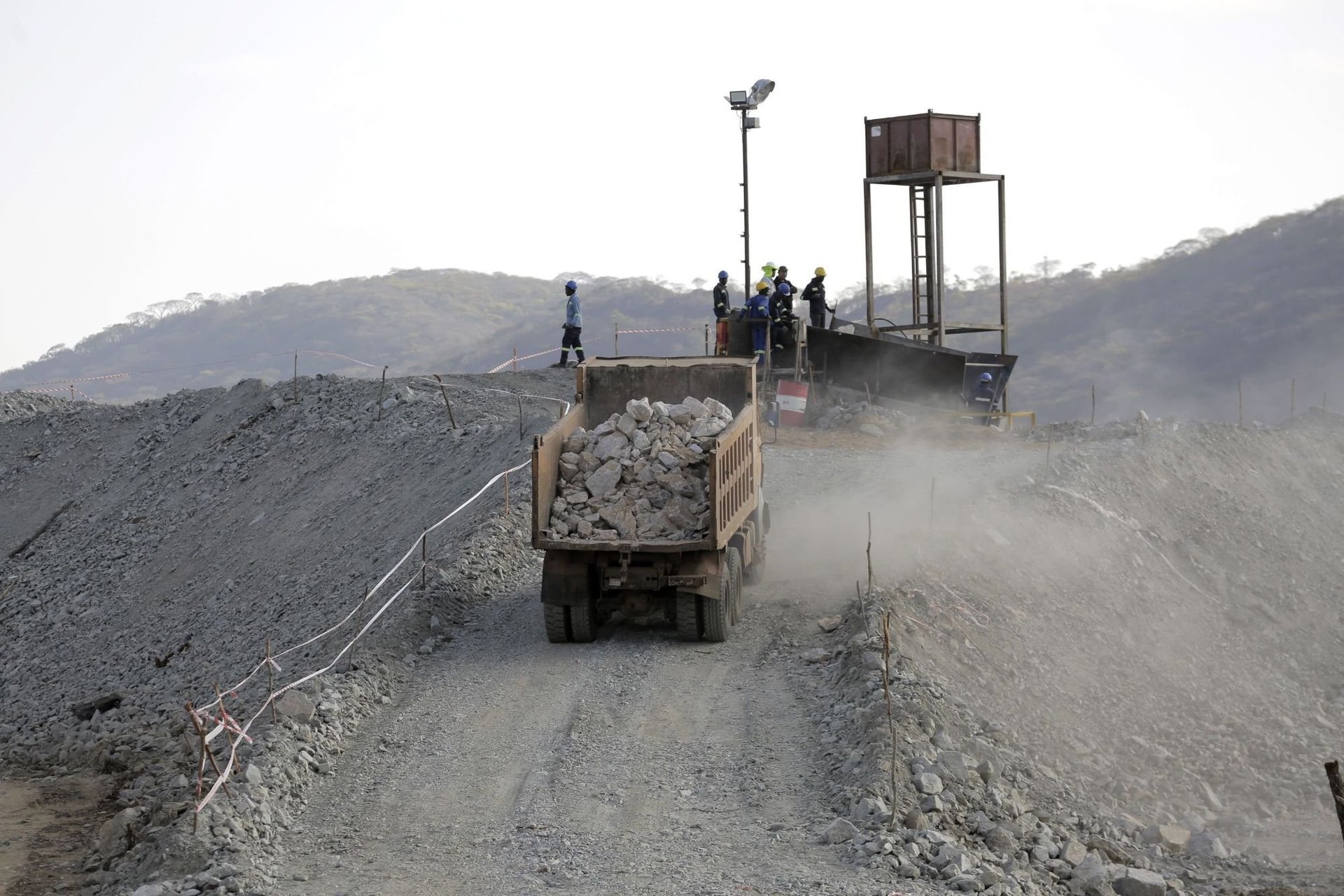
In the second half of June and the first half of July 2026, the lithium narrative shifted noticeably. The key question was no longer simply where new spodumene or brine deposits might be found, but who can actually convert that material into battery-grade chemical supply fast enough, cheaply enough, and with enough power and logistics support to matter. Zimbabwe’s only lithium sulphate plant said it has no capacity to process third-party material just as the country prepares to ban unprocessed concentrate exports from January 2027, while Zijin began lithium concentrate exports from Congo’s Manono project, showing how new upstream supply is still being pulled into a highly concentrated processing chain. The IEA, meanwhile, said the average market share of the top three refining nations for critical minerals rose to 86% in 2024, with China the main supplier behind all the major growth in refining capacity except nickel.
Why processing is now the central story
Lithium is not especially rare in the earth’s crust; the constraint is turning rock or brine into the exact chemical the battery industry wants. Columbia’s energy-policy fact sheet notes that lithium must be processed into lithium carbonate or lithium hydroxide before it can be used in batteries, and that China still accounts for roughly 65% of global lithium processing capacity. It also notes that Australia, despite being the largest lithium producer, exported 98% of its spodumene to China for processing in fiscal 2022-23. That means the trade is increasingly about conversion power, not just mine output.
That is why the Zimbabwe case matters so much. The country is Africa’s top lithium producer, but its only completed sulphate plant cannot process outside material, and that miners are pleading for more time because the rest of the processing build-out is not ready. If the ban on raw concentrate exports arrives before local plants are online, the result is likely to be a supply-chain bottleneck rather than a clean move up the value chain.
Processing technology: the hard part is not mining, it is conversion
A strong subsection here is the technology choice itself. Hard-rock spodumene, brines, and direct lithium extraction (DLE) each have different economics and failure points. Hard-rock material usually needs roasting and chemical conversion; brines need evaporation or DLE-style separation; and both routes must meet battery-grade purity standards. Brines can be converted directly into carbonate, while hard-rock deposits can be processed into carbonate or hydroxide, and that DLE is still an emerging technology.
This lets you ask several useful questions: which route is easiest to scale, which route can be financed, which route can be powered reliably, and which route is least exposed to impurities and reagent shortages? The practical answer in 2026 is that conversion plants are harder to build than mine pits, slower to permit, and more sensitive to utilities and operating discipline. Zimbabwe’s bottleneck is a good live example of that problem.
Processing costs and energy intensity
The cleanest angle here is not a single cost number, but the cost stack. Processing lithium requires capex for plants, reagent spend, water handling, quality control, waste management, and above all reliable power. That matters because the economics of a converter can break quickly if the grid is unstable or power is expensive. Zimbabwe is useful as a case study: the World Bank’s 2026 energy compact says the country had 2,962 MW of installed capacity, with hydro making up 40% of generation, and it estimates power shortages cost the economy 6.1% of GDP in 2022. Renewables are being expanded, but the current system still leaves major exposure to outages and underperformance.
Local processing only works if the energy system works. In a country like Zimbabwe, the argument for downstream value-add is real, but the industrial base required to support it is still under stress. The IEA also says Zimbabwe has large coal reserves and significant untapped hydropower potential, which means the medium-term solution is likely to be a more balanced, cheaper power mix rather than reliance on any one source.
Supply, seaborne flows, and arbitrage
Lithium is still globally traded through a China-centered processing and pricing network. Zijin’s Manono exports from Congo have already started, but those initial shipments are likely trial cargoes and the project’s 2026 target is 30,000 tonnes of lithium carbonate equivalent. In other words, Africa is adding upstream supply, but the downstream conversion and market access question is still open.
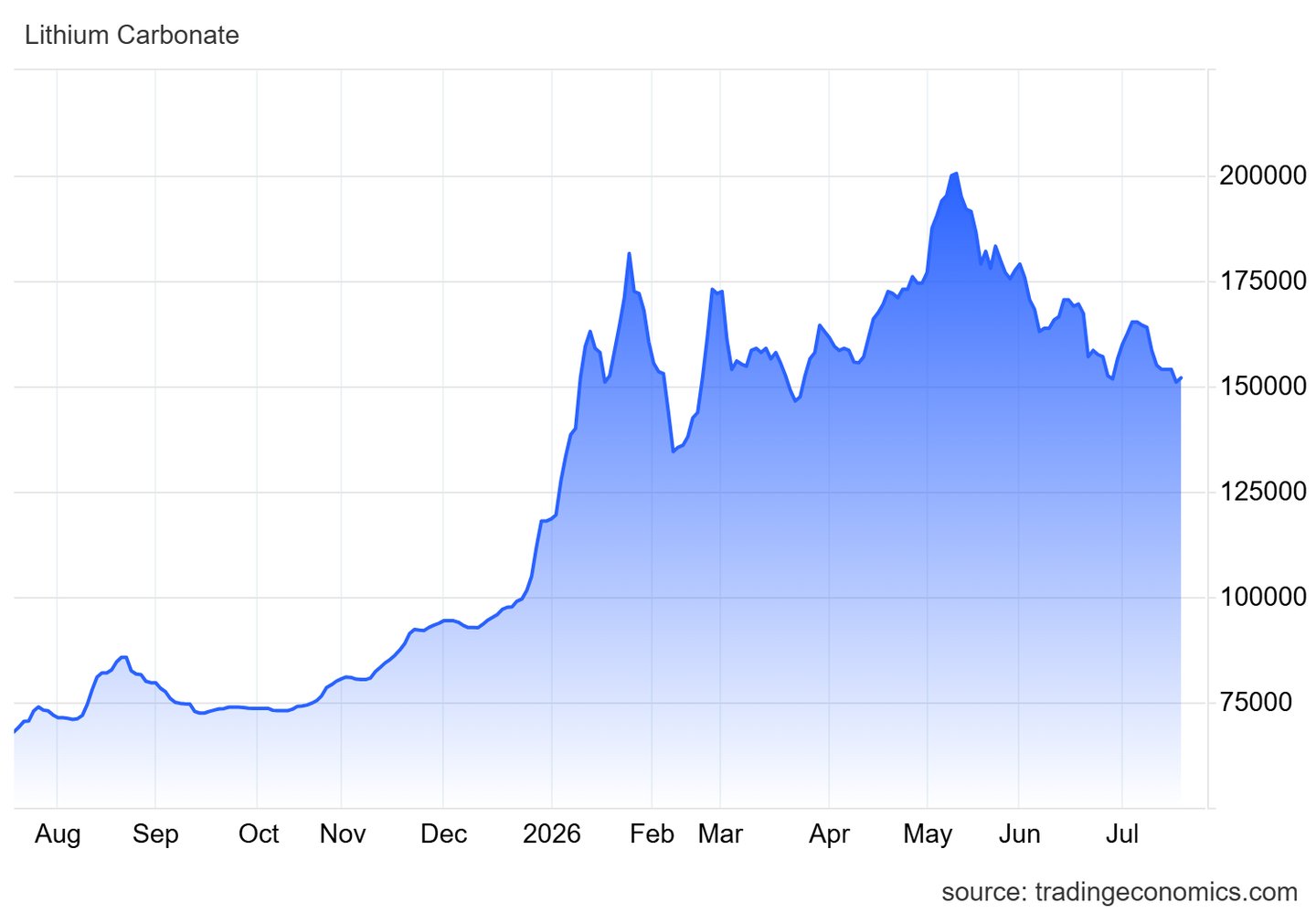
A useful angle is to discuss how seaborne concentrate still flows toward the most capable converters and then back out as battery chemicals. That creates arbitrage opportunities between local concentrate prices, Chinese conversion margins, and overseas spot premiums. China’s lithium futures market is the main short-term signal for the broader market, while Western pricing remains linked to assessments and thinner contracts. In June 2026, the CME lithium hydroxide contract had already rebounded above $20,000 per ton, showing that sentiment had turned even before the July supply headlines.
The entire Lithium supply-chain could be structured around 3 main questions - where does the ore start, where does it become battery-grade, and where does price discovery actually happen? - In 2026, the answer to all three still points heavily toward China.
Downstream demand: the story is broader than EVs
The market is no longer just an EV story. Stationary battery storage is becoming a primary growth driver, helped by AI data-center build-outs and grid-strengthening demand. Fastmarkets estimated lithium demand for battery storage systems is growing at 40% a year, and energy-storage demand could grow 55% in 2026 and rise to 31% of total lithium consumption. That matters because storage can cushion weakness in EV demand, but it can also create a separate demand cycle with its own policy and utility drivers.
The most interesting downstream question is whether storage becomes a stabilizer or a new source of volatility. Too much lithium price inflation could hurt the economics of storage itself, so the market still needs prices high enough to reward supply but not so high that end users switch chemistry or delay projects.
Price outlook: tighter, but not a straight-line bull market
The IEA said in July 2026 that lithium prices more than doubled, helped by strong storage demand and constrained supply, while cobalt also surged on export restrictions in the DRC. At the same time, we still expect supply growth to remain strong enough to limit the upside, with 2026 demand forecasts ranging from 18% to 29% and supply growth from 18% to 35%. That is why the best base case is not a runaway bull market, but a more volatile range with periodic spikes whenever a mine permit, export ban, or converter outage hits the tape.
China’s CATL secured a permit on 29 June to restart its Jianxiawo mine after nearly a year of suspension, and that the site accounts for about 3% of 2025 global output. That means one regulatory event can still swing sentiment sharply, even when the longer-term market remains structurally better supplied than a pure shortage story would suggest.
Investments implications: Refiners vs Miners
Perhaps the most important lesson from June–July 2026 is that discovering lithium deposits is no longer sufficient to create value. Future competitive advantage increasingly depends on controlling the middle of the supply chain. Companies with exposure to lithium sulphate plants, lithium hydroxide refineries, integrated mine-to-chemical operations, reliable power infrastructure, long-term offtake agreements, are likely to capture a larger share of industry margins than companies selling unprocessed concentrate alone. For mining companies, vertical integration is becoming increasingly attractive. Owning conversion capacity offers several advantages: higher realised selling prices, reduced exposure to concentrate discounts, greater pricing power, closer relationships with battery manufacturers, access to long-term supply agreements. For governments, the challenge is different. Policies encouraging domestic processing can increase industrial value addition, but only if accompanied by investment in: electricity generation, transport infrastructure, industrial water supply, skilled labour, permitting efficiency. Otherwise, countries risk replacing one bottleneck - mine supply - with another: insufficient chemical processing capacity. Ultimately, the defining investment theme of 2026 is no longer "Who owns the lithium?" Instead, it has become: "Who can convert lithium into battery-grade chemicals most efficiently, reliably and at the lowest cost?"
Bottom line
The 2026 lithium market is being defined less by discovery than by conversion. The winners will be the producers that can secure power, build plants, control impurities, and move material through trade channels into battery-grade chemicals. The losers will be the miners that have rocks in the ground but no industrial pathway to turn them into saleable supply. That is the real bottleneck now.
Connect
info@energizetomorrowus.com
© 2026. All rights reserved.